
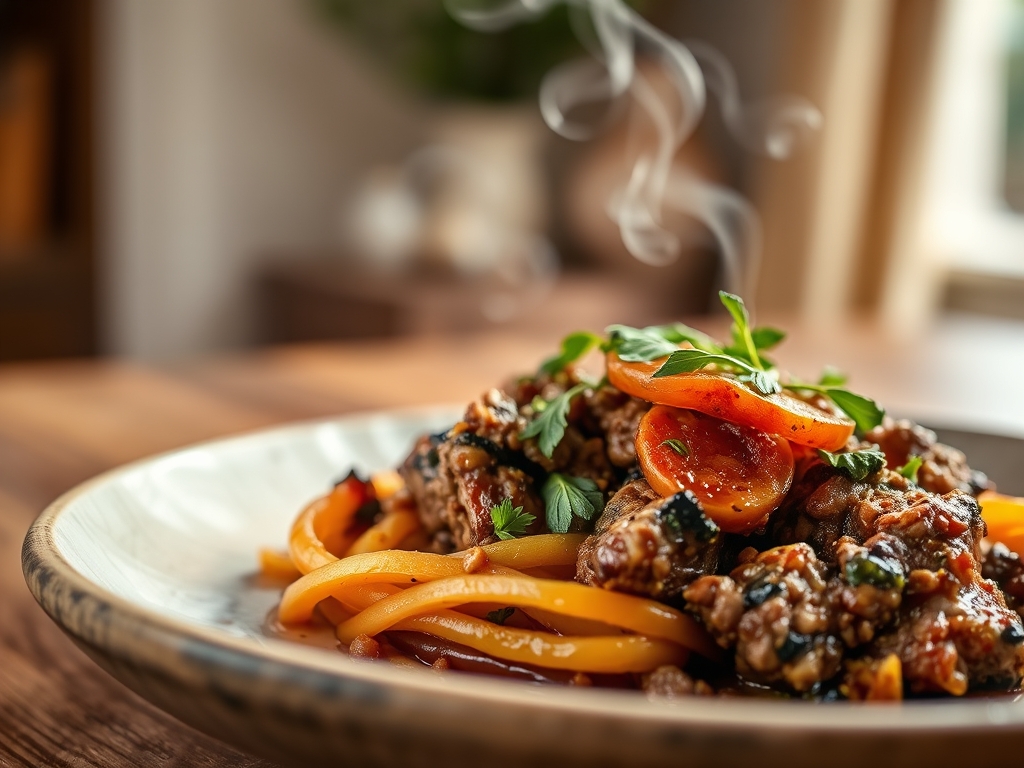
Imagine the scent of fat rendering into the cellular cavities of a violet-skinned nightshade. When you master eggplant and ground beef recipes, you are not just cooking; you are performing a delicate exchange of lipids and moisture. The beef provides the savory, iron-rich structure while the eggplant acts as a thermal sponge, soaking up every drop of flavor.
The magic happens the moment the heat hits the pan. Eggplant is naturally porous, containing tiny air pockets that collapse during the cooking process. If you time it right, those pockets fill with the savory juices of the beef rather than just oil. This creates a texture that is silky yet substantial. Whether you are craving a Mediterranean moussaka or a spicy Sichuan stir-fry, the chemistry remains the same. We are looking for that perfect Maillard reaction on the beef and a complete breakdown of the eggplant's pectin structure.
This guide is your backstage pass to the science of the sauté. We are going to dive into the molecular reasons why these two ingredients are soulmates. Grab your favorite heavy-bottomed skillet and a sharp chef's knife. We are about to transform these humble staples into a weeknight masterpiece that tastes like it took twelve hours to simmer. Let's get into the grit and the glory of the perfect pairing.
The Gathers:
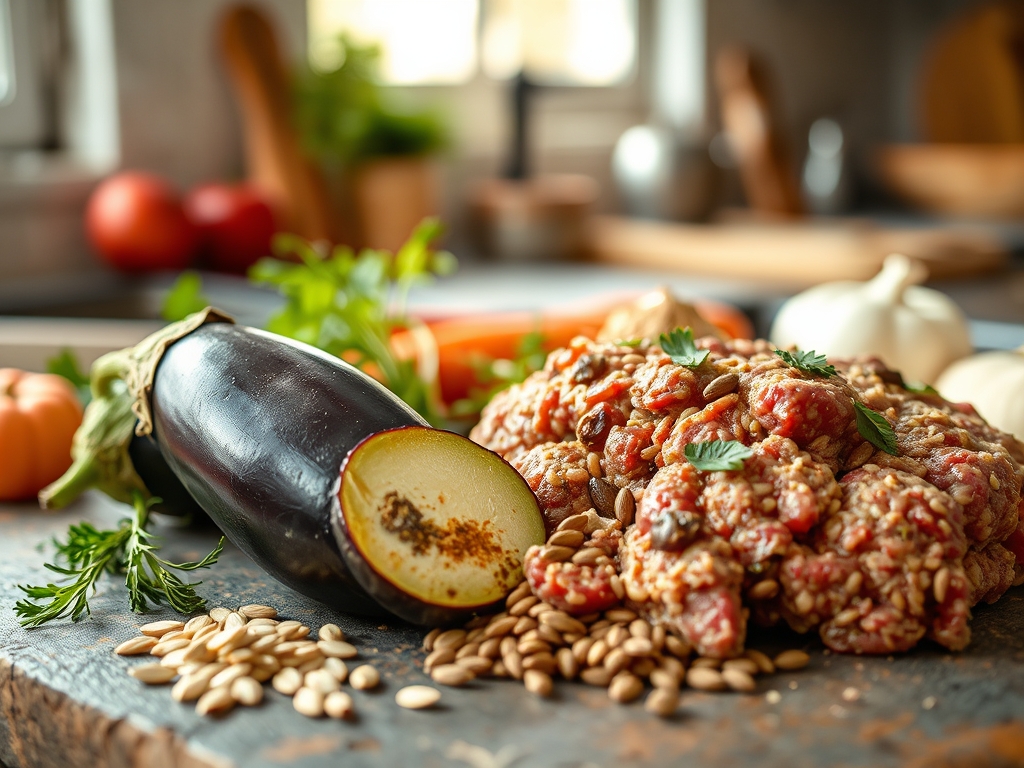
To execute these eggplant and ground beef recipes with precision, your mise-en-place must be flawless. Start with the eggplant; look for Globe or Italian varieties that feel heavy for their size, indicating high moisture content. You will need 80/20 ground beef to ensure enough tallow is present to lubricate the eggplant flesh.
Your aromatic base should include "The Holy Trinity" of garlic, shallots, and perhaps a bit of ginger if you are leaning toward an Asian profile. Use a microplane to zest your aromatics; this increases surface area and ensures the essential oils infuse the fat immediately. You will also need a high-quality sea salt to initiate osmosis, drawing out excess moisture from the eggplant before it hits the heat.
Smart Substitutions:
If you want to lighten the dish, swap the ground beef for ground turkey but add a teaspoon of liquid aminos to mimic the umami depth of red meat. For the eggplant, if Globe varieties are unavailable, Japanese eggplants offer a thinner skin and creamier interior, requiring less "sweating" time. If you are avoiding nightshades entirely, zucchini is a functional substitute, though it lacks the specific viscous texture that defines a true eggplant dish.
The Clock: Timing the Chef's Flow
Efficiency in the kitchen is about managing "The Clock." For most eggplant and ground beef recipes, you are looking at a 15-minute prep and a 25-minute cook time. The "Chef's Flow" dictates that you prep the eggplant first. Because it requires a salt-rest to break down the cell walls, it needs a ten-minute head start while you brown the beef.
Use a digital scale to portion your meat into four-ounce patties before browning; this ensures even cooking. The beef takes about eight minutes to reach a safe internal temperature while developing a crust. The final ten minutes are reserved for the "Marriage," where the eggplant and beef simmer together, allowing the flavors to meld. If you are using a saucier, the sloped sides will help you whisk in any finishing glazes without splashing.
The Masterclass:
1. The Osmotic Prep
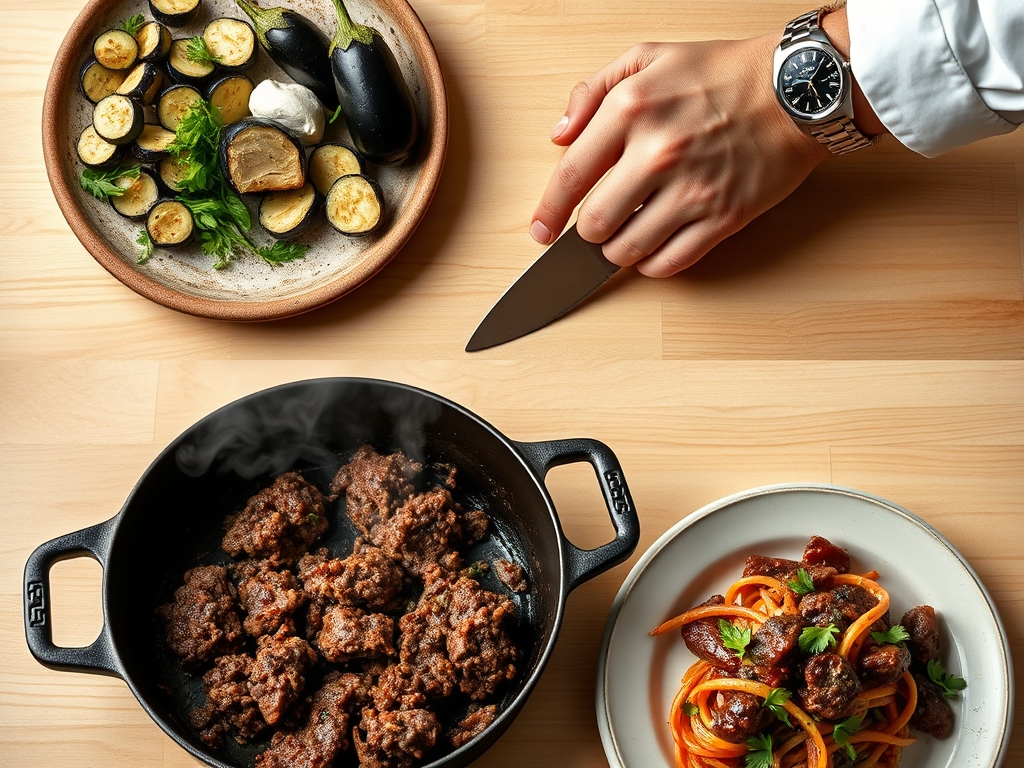
Slice your eggplant into uniform cubes using a bench scraper to move them efficiently. Generously salt the pieces and let them sit in a colander for ten minutes. You will see beads of "sweat" appear on the surface.
Pro Tip: This process is called osmosis. By drawing out the water, you collapse the air pockets within the eggplant. This prevents the vegetable from acting like a literal sponge that drinks up too much oil, which would result in a greasy final product.
2. The Maillard Sear
Heat your heavy-bottomed skillet until it is wispy with smoke. Add the ground beef in a single layer. Do not stir immediately; let the meat develop a deep brown crust.
Pro Tip: This is the Maillard reaction, a chemical reaction between amino acids and reducing sugars. It creates hundreds of different flavor compounds. If you crowd the pan, the meat will steam in its own moisture rather than sear, losing that piquant, savory edge.
3. Deglazing the Fond
Once the beef is browned, remove it and set it aside. You will see brown bits stuck to the bottom of the pan; this is "fond." Add a splash of wine or stock and use a wooden spoon to scrape it up.
Pro Tip: Deglazing captures the concentrated proteins left behind. This liquid becomes a highly flavored base for your sauce, ensuring no flavor is wasted. It is the secret to professional-level depth in home cooking.
4. The Fat Infusion
Add the eggplant to the pan with the deglazing liquid. If the pan looks dry, add a tablespoon of olive oil. The eggplant will now absorb the beef-infused liquids.
Pro Tip: This is "thermal carryover" in reverse. The eggplant uses the residual heat and fat from the beef to soften its cellulose. By cooking it in the beef's "footprints," you ensure every bite of vegetable tastes like the meat.
5. The Emulsified Finish
Return the beef to the pan and add your aromatics. Toss everything together with tongs to ensure even distribution. Add a knob of cold butter or a splash of cream to finish.
Pro Tip: Adding a cold fat at the end creates an emulsion. This binds the watery juices and the rendered fats into a silky, viscous sauce that clings to the ingredients rather than pooling at the bottom of the plate.
The Deep Dive:
Macro Nutrition:
A standard serving of these eggplant and ground beef recipes provides approximately 28g of protein and 12g of healthy fats. Eggplant is a powerhouse of fiber and nasunin, an antioxidant found in the purple skin that protects brain cell membranes.
Dietary Swaps:
- Vegan: Replace beef with "soy crumbles" or minced walnuts and mushrooms. Use coconut aminos for the umami hit.
- Keto: This dish is naturally low-carb. Ensure you do not use sugar-laden pre-made sauces. Stick to fresh herbs and lemon juice.
- GF: Always check your spices for hidden gluten fillers. Use tamari instead of soy sauce.
The Fix-It:
- Too Greasy: If the eggplant soaked up too much oil, toss in a handful of pre-cooked rice or quinoa to absorb the excess fat.
- Bitter Taste: This usually happens with older eggplants. Add a teaspoon of honey or balsamic glaze to balance the bitterness with acidity and sweetness.
- Tough Beef: If the beef feels "rubbery," it was likely overcooked or too lean. Add a splash of beef bone broth and simmer for five minutes to rehydrate the fibers.
Meal Prep Science:
When reheating, do not use a microwave if possible. The microwave excites water molecules, which can make the eggplant mushy. Instead, use a small skillet over medium heat. This allows the fats to re-liquefy slowly, maintaining the "day-one" emulsion and texture.
The Wrap-Up:
Mastering eggplant and ground beef recipes is a rite of passage for any home cook looking to elevate their weeknight game. It is a lesson in texture, fat management, and the power of the Maillard reaction. By understanding the science of the "osmotic prep" and the "fat infusion," you turn a simple stir-fry into a gourmet experience. Remember, the eggplant is your canvas and the beef is your paint. Go forth, use your microplane with confidence, and enjoy the silky, savory rewards of your labor!
The Kitchen Table:
How do I stop eggplant from being soggy?
Salt the eggplant for 15 minutes before cooking to draw out moisture. This collapses the internal air pockets, preventing the vegetable from absorbing excess oil and becoming mushy during the sauté process.
Can I cook eggplant and beef in one pan?
Yes, but cook them in stages. Brown the beef first to develop a crust, remove it, then cook the eggplant in the rendered fat. Combine them at the end to maintain distinct textures.
Is it necessary to peel the eggplant?
Peeling is optional. The skin contains high levels of antioxidants and provides structural integrity. However, for larger Globe eggplants, the skin can be tough; peeling "stripes" offers a balance of texture and nutrition.
What beef fat percentage is best for eggplant?
An 80/20 blend is ideal. The 20 percent fat content provides the necessary lipids to soften the eggplant's cellular structure, creating a rich, silky mouthfeel without requiring excessive amounts of added cooking oil.