
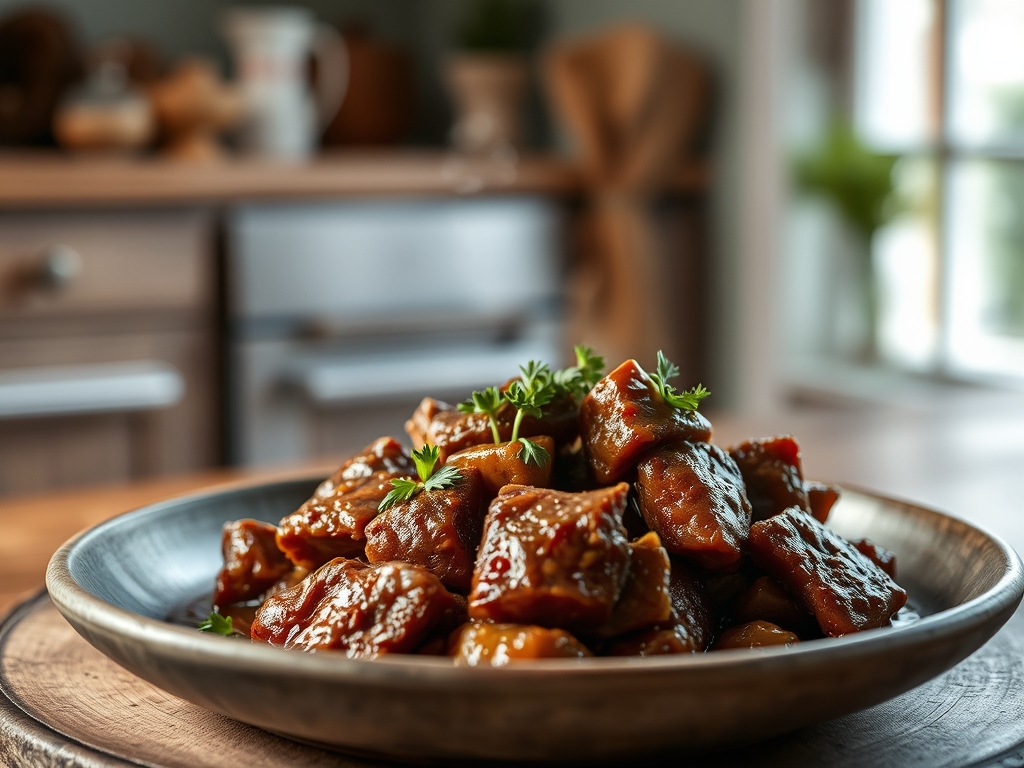
Picture the kitchen at 4:00 PM on a Sunday. The air is thick with the scent of caramelized onions and the deep, woodsy perfume of rosemary. You are about to master oven stew beef recipes that redefine comfort. There is something profoundly scientific about the way a heavy lid traps steam to transform tough connective tissue into velvet.
The magic happens when you move the pot from the stovetop to the oven. Unlike the aggressive, uneven heat of a burner, the oven provides a 360-degree thermal embrace. This consistent environment ensures that the liquid gently simmers without scorching the bottom. We are chasing the Maillard reaction; that glorious chemical marriage between amino acids and reducing sugars that creates a crust of pure flavor. By the time you pull that heavy Dutch oven out, the sauce will be glossy and the beef will yield to the mere suggestion of a fork. This is not just cooking; it is a slow-motion molecular transformation that rewards patience with the ultimate culinary hug.
The Gathers:
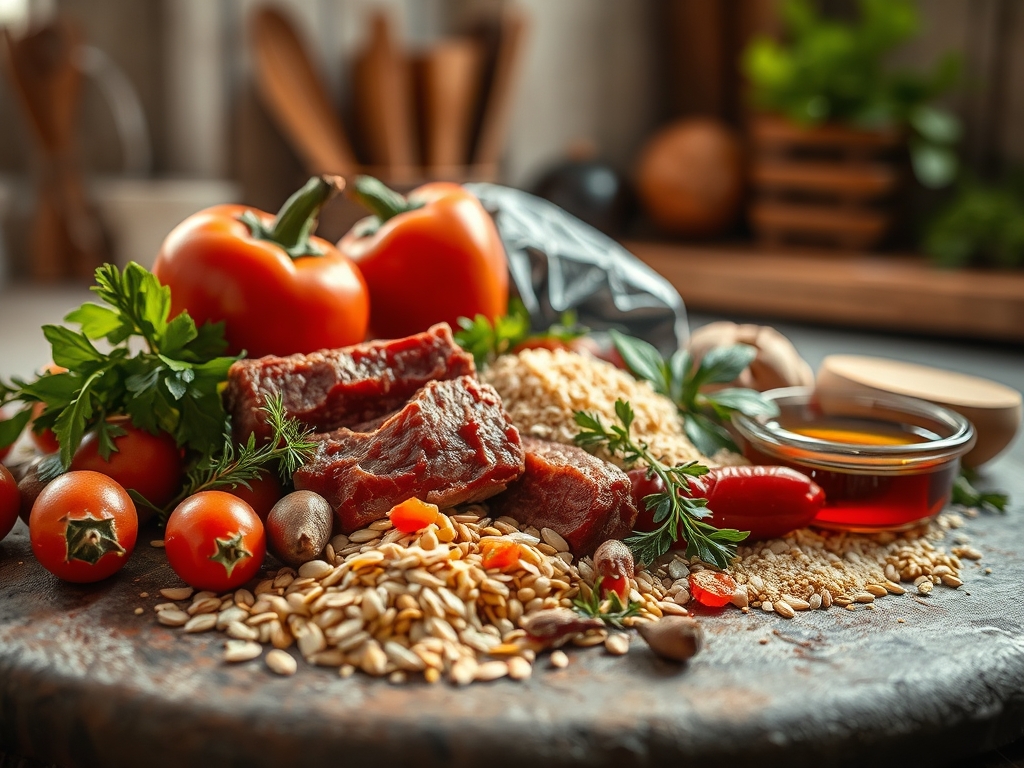
Before we ignite the flame, let us talk about the mise-en-place. You need a heavy-bottomed skillet or a cast-iron Dutch oven to ensure even heat distribution. Use a digital scale to measure your beef; aim for 2 pounds of well-marbled chuck roast. Chuck is the gold standard because it is packed with collagen, which breaks down into gelatin to create a viscous, lip-smacking sauce.
You will also need your aromatics: yellow onions, carrots, and celery. Use a sharp chef knife to achieve a uniform dice so they cook at the same rate. For the liquid gold, gather high-quality beef stock, a splash of piquant Worcestershire sauce, and a dry red wine like Cabernet Sauvignon. The acidity in the wine is essential to balance the richness of the rendered fat.
Smart Substitutions:
If you are out of red wine, use a tablespoon of balsamic vinegar mixed with extra broth to provide that necessary acid. No chuck roast? Look for "bottom round" or "gravy beef," but avoid lean cuts like sirloin, as they will turn into shoe leather in the dry heat. For a gluten-free thickener, swap the traditional flour dredge for a cornstarch slurry added at the very end.
The Clock: Chef's Flow
Efficiency in the kitchen is about overlapping tasks. Your total prep time should be 30 minutes, followed by a 3-hour low-and-slow braise. Start by preheating your oven to 325 degrees Fahrenheit. While the oven stabilizes, sear your meat in batches. Do not crowd the pan; crowding causes the temperature to drop, leading to gray, steamed meat instead of a dark brown crust.
While the beef sears, chop your vegetables. This "Chef's Flow" ensures that by the time the last batch of beef is browned, your aromatics are ready to hit the pan. The oven does 90 percent of the work. Once the lid is on and the pot is tucked away, you have a three-hour window to relax, read, or prep a side of creamy polenta.
The Masterclass:
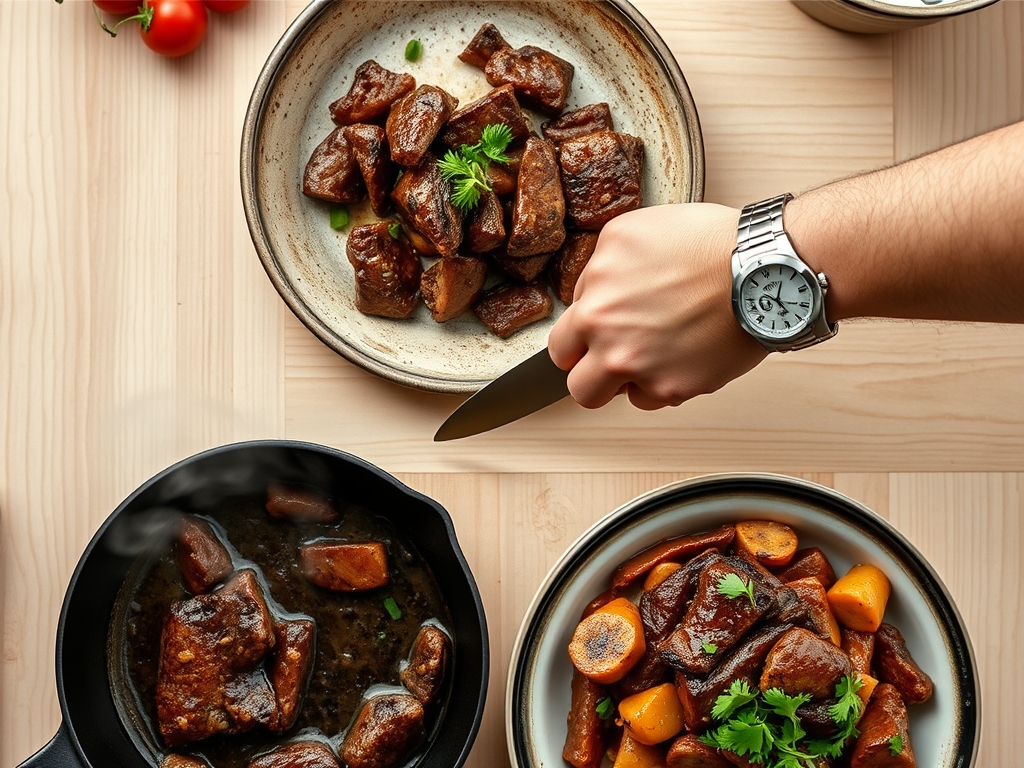
1. The Sear and Render
Pat your beef cubes bone-dry with paper towels. Use tongs to place them into a shimmering layer of oil in your Dutch oven. Let them sit undisturbed for 3 minutes to develop a deep crust.
Pro Tip: This is the Maillard reaction. If the meat is wet, the energy goes into evaporating surface moisture instead of browning. Drying the meat ensures the temperature exceeds 300 degrees Fahrenheit, creating hundreds of new flavor compounds.
2. Sauté the Aromatics
Remove the beef and add your onions, carrots, and celery to the rendered fat. Use a wooden spoon to scrape the bottom of the pot.
Pro Tip: This process is called sweating. By cooking vegetables over medium heat, you break down cellulose walls and release natural sugars without browning them too quickly, creating a sweet, complex base for the sauce.
3. Deglaze with Precision
Pour in your red wine or a splash of stock. Use your spoon to vigorously scrape up the brown bits stuck to the bottom.
Pro Tip: Those bits are called fond. They are concentrated packets of flavor. Deglazing dissolves these caramelized proteins back into the liquid, ensuring none of that savory intensity is lost to the sink.
4. The Long Braise
Return the beef to the pot, add your herbs and remaining liquid, and cover tightly. Slide it into the center of the oven.
Pro Tip: This is the hydrolysis phase. At temperatures between 160 and 180 degrees Fahrenheit, tough collagen fibers physically melt into gelatin. This adds body to the sauce and creates the "melt-in-your-mouth" texture characteristic of elite oven stew beef recipes.
The Deep Dive:
From a nutritional standpoint, a standard serving offers roughly 35 grams of protein and is rich in iron and zinc. To keep it Keto, omit the potatoes and use radishes or turnips; they soak up the beef fat beautifully and mimic the texture of a potato. For a Vegan alternative, swap beef for king oyster mushrooms and use a mushroom-based "no-beef" broth to maintain that umami depth.
The Fix-It: Common Pitfalls
- The Sauce is Too Thin: If your stew looks like soup, whisk a tablespoon of softened butter with a tablespoon of flour (a beurre manié) and stir it in for the last 15 minutes.
- The Meat is Tough: You likely pulled it too early. If the beef is still chewy, the collagen hasn't fully converted. Give it another 30 minutes.
- Too Much Fat: If a layer of oil sits on top, use a chilled metal spoon to skim the surface. The fat will cling to the cold metal.
Meal Prep Science:
Stew is famously better on day two. As it cools, the aromatics continue to infuse the liquid, and the starch from the potatoes stabilizes the emulsion. When reheating, do it slowly on the stovetop with a splash of water to loosen the gelatin. Avoid the microwave, which can cause the beef to become rubbery through uneven heating.
The Wrap-Up:
You are now armed with the technical prowess to turn a humble cut of meat into a masterpiece. These oven stew beef recipes are about more than just dinner; they are about understanding the chemistry of heat and time. Grab your saucier, find the best chuck roast at the butcher, and let the oven do its rhythmic dance. Your home is about to smell like an artisanal French bistro, and your guests will definitely be asking for seconds.
The Kitchen Table:
Why is my stew beef still tough after two hours?
The beef likely hasn't reached the internal temperature required for collagen to melt. Continue cooking at 325 degrees until the meat fibers separate easily with a fork. This usually takes between three and four hours for large batches.
Can I use a slow cooker instead of an oven?
Yes, but you will lose the top-down browning and liquid reduction found in the oven. If using a slow cooker, reduce the added liquid by one-third to prevent a watery consistency, as steam cannot escape the sealed unit.
What is the best wine for beef stew?
Choose a dry, medium-bodied red like Merlot or Cabernet Sauvignon. Avoid "cooking wines" which contain excess salt. The acidity in a quality table wine helps break down muscle fibers while adding a sophisticated, fruity backbone to the sauce.
How do I get a thick, glossy sauce?
Dredge your beef in flour before searing to create a natural roux. Alternatively, allow the stew to sit for ten minutes after cooking; the starches will settle and thicken the liquid as the temperature slightly drops.