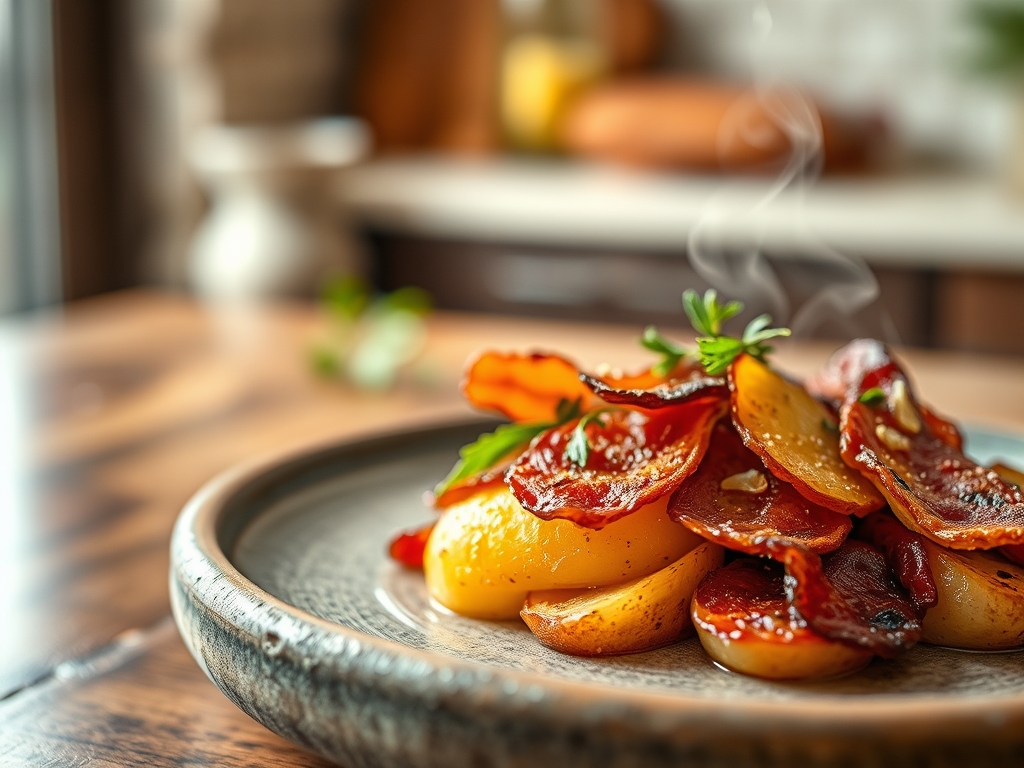
Picture the scent of rendered fat hitting a scorching heavy bottomed skillet; it is the olfactory equivalent of a warm hug. When you master bacon and potato recipes, you are not just cooking dinner; you are conducting a symphony of starch and salt. The alchemy of a crispy russet meeting smoky pork belly is unrivaled in the culinary world.
We have all been there; staring at a bag of spuds and a vacuum-sealed pack of bacon, wondering how to transcend the basic hash. The secret lies in the molecular interaction between animal fats and tuber starches. Potatoes are essentially blank canvases of cellular structures waiting to be infused with the piquant, salty depth of high quality bacon. Today, we are moving past the mundane. We are going to explore seven hacks that utilize everything from the Maillard reaction to precise thermal control. Whether you are aiming for a silky pomme puree or a structurally sound hasselback, these techniques will transform your kitchen into a high end bistro. Let us dive into the science of the crunch.
The Gathers:
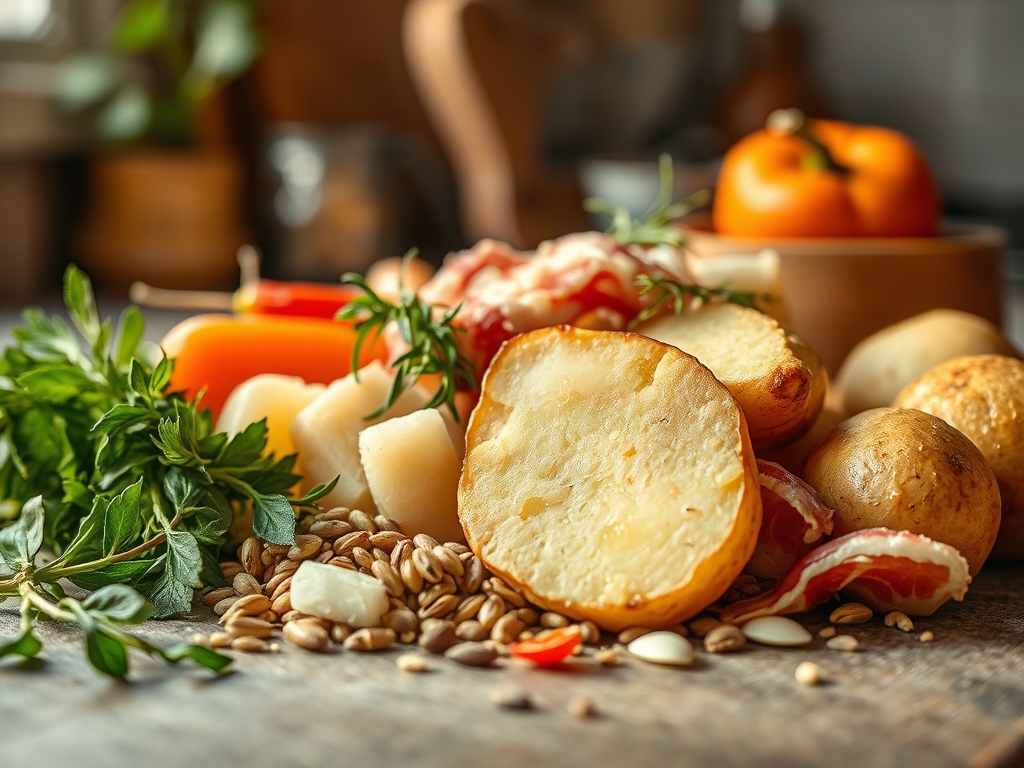
To execute these bacon and potato recipes with precision, your mise-en-place must be immaculate. Start with your tubers. For high heat roasting, choose Russets for their high starch content; for salads or gratins, select Yukon Golds for their waxy, viscous texture. Your bacon should be thick-cut to allow for a slow render without immediate carbonization. You will also need high smoke point oils, like avocado or grapeseed, to supplement the pork fat.
Smart Substitutions are vital for the modern pantry. If you are dodging pork, smoked duck breast offers a similar lipid profile and deep umami. For a plant-based twist, shiitake mushrooms dehydrated with liquid smoke and tamari can mimic the savory profile of bacon. If you lack a specific potato, remember the Golden Rule: starchier spuds fry better, while waxy spuds boil better. Grab your digital scale; we measure by mass here, not volume, to ensure the ratio of salt to starch is chemically perfect.
The Clock:
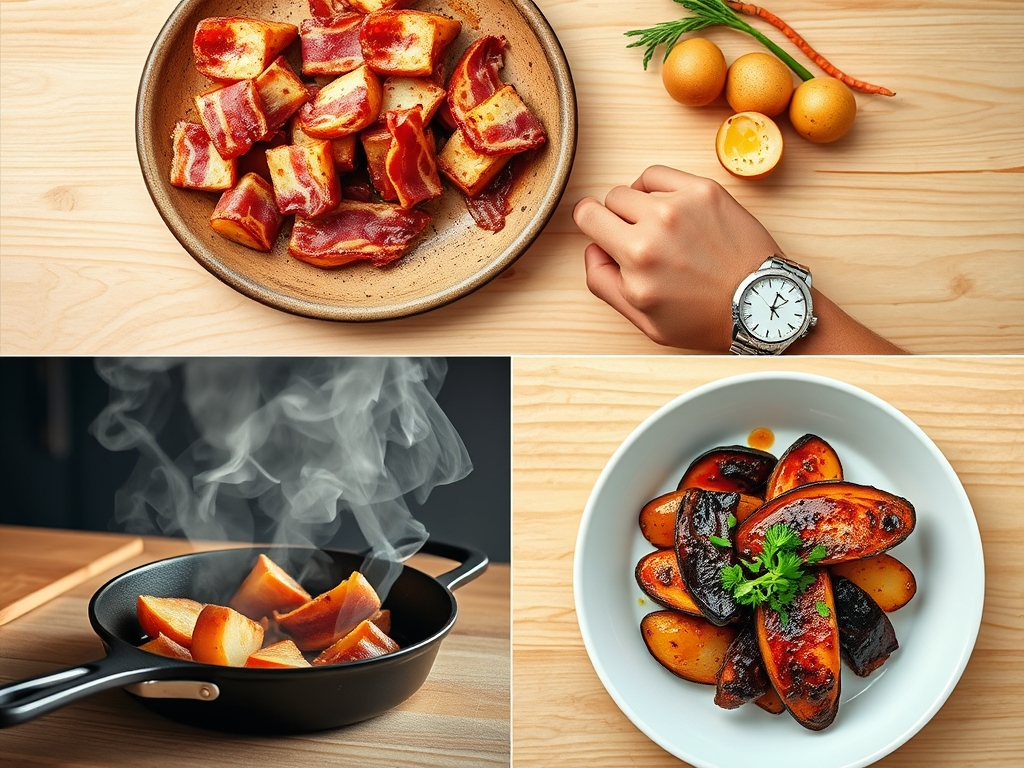
Efficiency in the kitchen is about managing the Chef's Flow. Total prep time for these hacks spans roughly 20 minutes, with active cook times ranging from 15 to 45 minutes depending on the method. The key is overlapping tasks. While your oven preheats to a precise 425 degrees Fahrenheit, use your bench scraper to clear your workstation and your mandoline to prep the potatoes.
The "Flow" dictates that you render your bacon first. This allows the fat to be ready for the potatoes the moment they are cut, preventing enzymatic browning caused by oxygen exposure. By the time your bacon is crispy, your potatoes should be hitting the pan. This synchronized timing ensures that both components reach their peak texture simultaneously, preventing the dreaded "soggy spud" syndrome.
The Masterclass:
1. The Cold Start Render
Place your chopped bacon in a cold saucier or skillet before turning on the heat. This allows the fat to liquefy slowly before the proteins tighten and toughen. As the temperature rises, the fat becomes a medium for even heat distribution.
Pro Tip: This technique prevents the bacon from curling and ensures maximum fat extraction. Science calls this lipid liberation, which provides the perfect frying medium for your potatoes later.
2. The Alkaline Parboil
Before roasting, boil your potato chunks in water spiked with half a teaspoon of baking soda. This breaks down the pectin on the surface of the potato, creating a starchy slurry.
Pro Tip: This slurry increases the surface area for the Maillard reaction. When these "fuzzy" potatoes hit the hot bacon fat, they develop a glass-like crust that stays crunchy for hours.
3. The Infused Fat Deglaze
After removing the crispy bacon, do not wash the pan. Use a splash of apple cider vinegar or white wine to deglaze the brown bits (fond). Toss your boiled potatoes directly into this piquant emulsion.
Pro Tip: Deglazing captures the concentrated umami trapped in the fond. The acidity of the vinegar balances the heavy lipids, brightening the overall flavor profile of the dish.
4. The Microplane Dusting
Once your bacon and potatoes are combined and roasted, finish the dish with a fine dusting of cured egg yolk or aged parmesan using a microplane.
Pro Tip: Fine particles create a high surface-to-volume ratio, allowing the topping to melt instantly into the nooks and crannies. This adds a layer of savory complexity without altering the texture of the crunch.
5. The Thermal Carryover Rest
Never serve your bacon and potato recipes immediately out of the oven. Transfer them to a wire rack set over a baking sheet for three minutes.
Pro Tip: Thermal carryover allows the internal steam to dissipate. If left on a flat surface, the steam would be trapped underneath, turning your crispy crust into a damp mess.
6. The Herb Infusion
In the final sixty seconds of cooking, toss in hardy herbs like rosemary or thyme. The high heat of the bacon fat will flash-fry the herbs, releasing essential oils.
Pro Tip: This is known as volatile aromatic extraction. The fats act as a carrier, pulling the fat-soluble flavor compounds out of the herbs and onto the potatoes.
7. The Emulsified Dressing Finish
If making a warm potato salad, whisk a spoonful of Dijon mustard into the warm bacon drippings before tossing. The mustard acts as an emulsifier, binding the fat to the potato starch.
Pro Tip: Mustard contains lecithin, which stabilizes the mixture. This prevents the oil from pooling at the bottom of the bowl, ensuring every bite is perfectly coated.
The Deep Dive:
Nutritionally, this combination is a powerhouse of potassium and energy, though it is high in saturated fats. A standard serving contains roughly 350 calories, with 20g of carbohydrates and 15g of fat. For a Keto version, swap the potatoes for cauliflower florets; they respond beautifully to the same roasting techniques. For a Vegan swap, use tempeh bacon and coconut oil infused with smoked paprika.
The Fix-It: If your potatoes are sticking, your pan wasn't hot enough; use a fish spatula to gently pry them loose. If the bacon is burning before the potatoes are soft, your heat is too high; move the pan to a lower rack in the oven. If the dish is too salty, add a squeeze of lemon juice; the acid masks the perception of excess sodium on the palate. For meal prep, reheat in an air fryer at 350 degrees for 4 minutes to reactivate the lipids and restore the crunch.
The Wrap-Up:
You are now armed with the technical prowess to turn humble ingredients into a culinary masterpiece. By understanding the chemistry of fat rendering and the physics of steam, your bacon and potato recipes will become the stuff of legend. Go forth, grab your favorite heavy-bottomed skillet, and let the sizzle begin. Your kitchen is your laboratory; make it delicious!
The Kitchen Table:
How do I make my potatoes extra crispy?
Parboil potatoes in alkaline water (add baking soda) before roasting. This creates a starchy surface layer that dehydrates into a shatteringly crisp crust when it reacts with hot bacon fat in a high-heat oven.
Can I use turkey bacon for these recipes?
Yes, but turkey bacon has significantly less fat. You must supplement the pan with two tablespoons of avocado oil or ghee to achieve the same golden-brown sear and prevent the potatoes from sticking to the skillet.
What is the best potato for roasting with bacon?
Russets are the gold standard for roasting due to their high starch content. They fluff up internally while the exterior crisps. Yukon Golds are a close second if you prefer a creamier, more buttery texture.
How do I prevent bacon from burning in the oven?
Cut bacon into uniform pieces and toss them with the potatoes halfway through the roasting process. This ensures the potatoes have a head start, as the bacon renders and crisps much faster than the tubers cook.