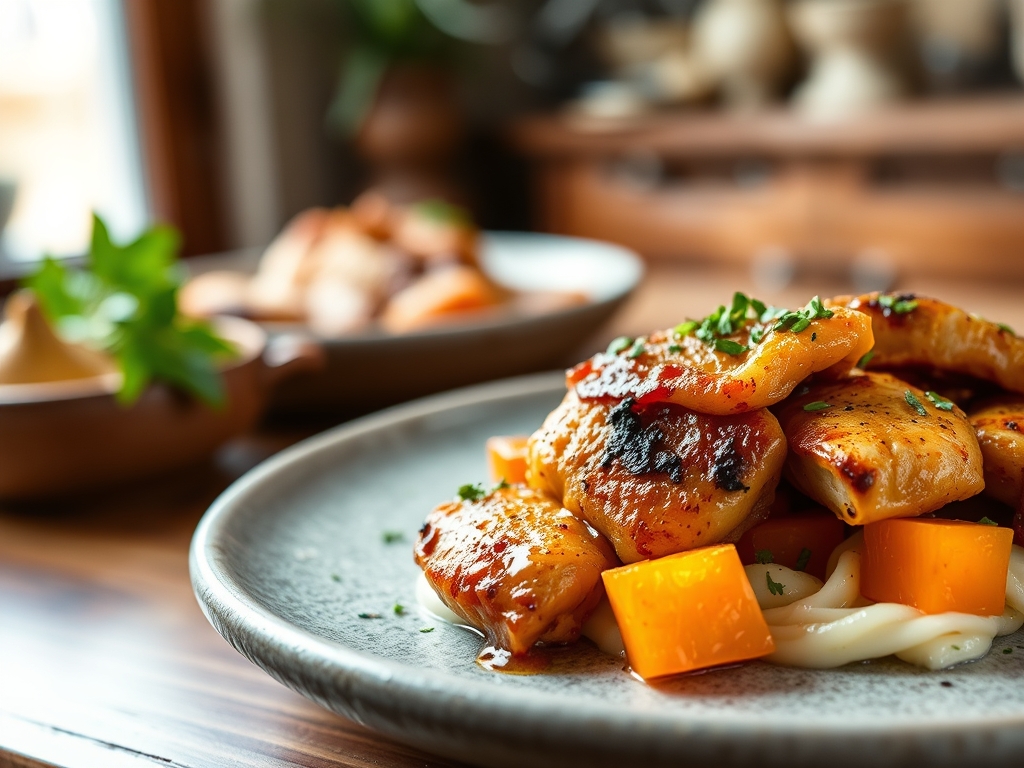
Imagine the scent of caramelized sugars mingling with the savory, golden aroma of searing poultry as it wafts through your kitchen. It is the ultimate culinary hug. When you master sweet potatoes and chicken recipes, you are playing with a sophisticated balance of complex carbohydrates and lean proteins that satisfy both the palate and the soul.
The magic happens when the earthy, honeyed notes of a roasted yam meet the salty, umami-rich crust of a perfectly browned chicken breast. It is not just dinner; it is a lesson in flavor architecture. We are moving beyond basic sheet pans and into the world of texture, where velvety purees meet crispy skins. Whether you are meal prepping for a high-octane week or hosting a cozy Sunday supper, these ingredients are your most reliable allies in the quest for a gourmet lifestyle.
The Gathers:
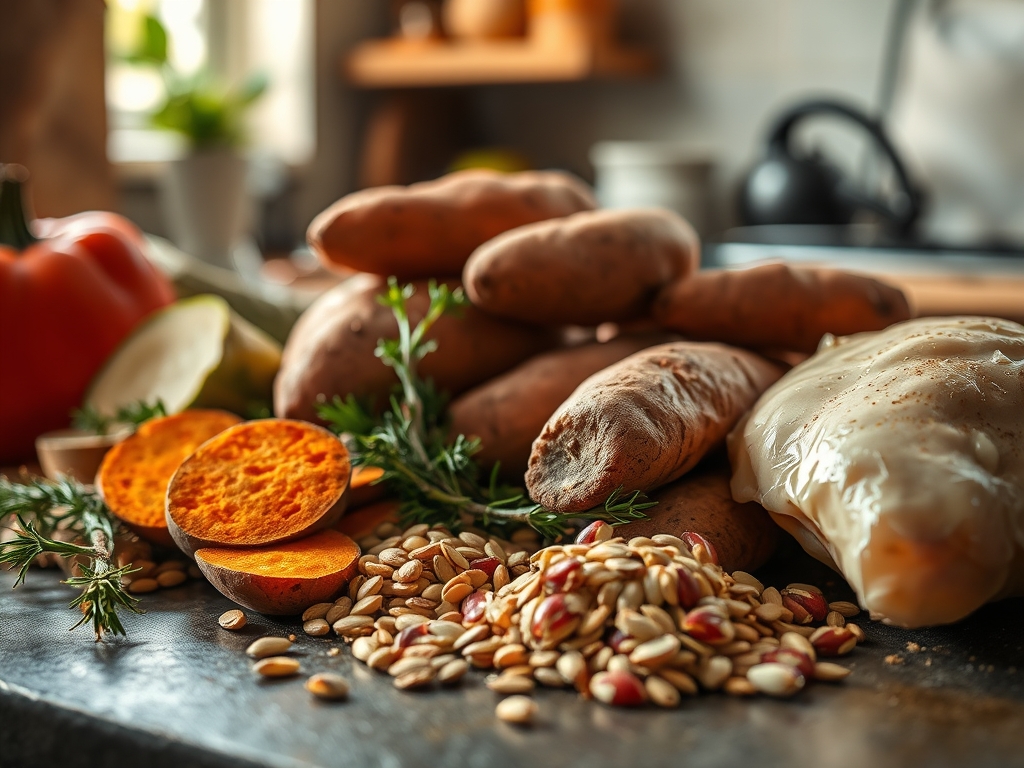
Before we ignite the burners, we must respect the mise-en-place. Your workstation should look like a curated laboratory of flavor. Start with high-moisture orange-fleshed sweet potatoes, such as Jewel or Beauregard varieties, which offer a viscous texture when roasted. For the protein, organic chicken thighs are preferred for their higher fat content; this fat will render out and baste your vegetables in liquid gold.
You will need your heavy-bottomed skillet for heat retention and a sharp chef's knife to ensure uniform cubes, which guarantees an even cook time. Gather your aromatics: fresh rosemary, garlic cloves, and perhaps a pinch of smoked paprika to provide a piquant counterpoint to the sweetness.
Smart Substitutions:
If you find yourself without sweet potatoes, Butternut squash or Kabocha provide a similar starch profile. For a lighter version, swap chicken thighs for breasts, but be sure to use a digital scale to track your portions. If you are dodging nightshades, replace the paprika with a dash of cumin and lemon zest to maintain that depth of flavor without the heat.
The Clock:
Efficiency in the kitchen is about the Chef's Flow. This is the art of overlapping tasks so that no second is wasted. Total active prep time should clock in at 20 minutes, with a total cook time of 35 to 45 minutes depending on the density of your poultry cuts.
The flow begins with the oven preheat; your oven must be a screaming 425 degrees Fahrenheit before a single ingredient touches the pan. While the air oscillates to temperature, you tackle the knife work. By the time your chicken is seasoned and your potatoes are tossed in high-smoke-point oil, the oven is ready. This synchronization ensures that the Maillard reaction begins the moment the tray slides onto the rack.
The Masterclass:
1. The Precision Cut
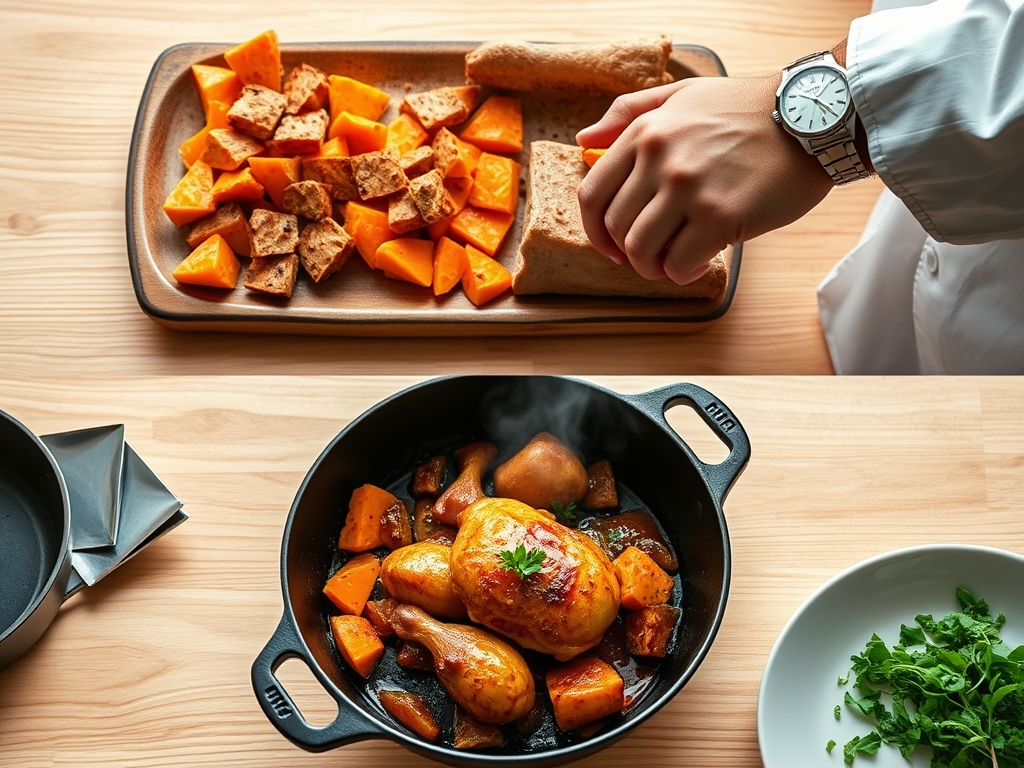
Uniformity is your best friend. Use your bench scraper to move your diced sweet potatoes into a large mixing bowl. Aim for one-inch cubes to ensure they soften at the same rate the chicken reaches its safe internal temperature.
Pro Tip: This prevents enzymatic browning. By keeping the cut surfaces minimal and moving quickly to the oil-coating phase, you preserve the vibrant beta-carotene color.
2. The Sear and Render
Place your chicken skin-side down in a cold heavy-bottomed skillet before turning on the heat. This allows the fat to slowly melt and render, creating a glass-like crispiness that is impossible to achieve in a pre-heated pan.
Pro Tip: This is the science of lipid extraction. Starting cold prevents the proteins from seizing, which keeps the meat tender while the skin dehydrates and crisps.
3. The Deglaze
Once the chicken is browned and removed, use a splash of white wine or chicken stock to deglaze the pan. Use a wooden spoon to scrape up the fond, those delicious brown bits stuck to the bottom.
Pro Tip: This creates a pan sauce base. The acidity in the wine breaks down the complex protein chains in the fond, transforming them into a concentrated flavor bomb.
4. The Aromatics Infusion
Add your garlic and herbs into the residual fats. Use a microplane to grate ginger or zest over the mixture for an instant aromatic lift.
Pro Tip: Fat is a flavor carrier. By heating the herbs in oil, you infuse the fat with essential oils, ensuring every bite of the sweet potato is seasoned from the inside out.
5. The Roast
Combine the chicken and potatoes on a sheet pan, ensuring they are not crowded. Crowding leads to steaming, and we want roasting.
Pro Tip: This utilizes convection heat. Air must circulate around each piece to trigger the caramelization of the natural sugars in the potatoes.
6. The Rest and Carryover
Remove the pan from the oven when the chicken hits 160 degrees Fahrenheit. Transfer the meat to a cutting board and let it sit for five minutes.
Pro Tip: This accounts for thermal carryover. The internal temperature will rise to the safe 165 degrees while resting, allowing the juices to redistribute so they do not spill out when you slice.
The Deep Dive:
When we look at the macro profile of sweet potatoes and chicken recipes, we see a nutritional powerhouse. You are getting a massive dose of Vitamin A and potassium alongside high-quality lean protein. For my keto friends, simply swap the sweet potatoes for cauliflower florets to drop the carb count while keeping the technique the same. For a vegan twist, replace the chicken with firm chickpeas or tempeh; just be sure to adjust your roasting time as these plant proteins crisp up much faster.
The Fix-It:
- Soggy Potatoes: Usually caused by overcrowding. Spread them across two pans if necessary to ensure proper airflow.
- Dry Chicken: You likely skipped the rest period. Always allow the meat to sit so the fibers can reabsorb moisture.
- Burnt Spices: If your paprika or garlic tastes bitter, you added them too early. Toss them in during the last 15 minutes of roasting to protect their delicate compounds.
Meal Prep Science:
To maintain "day-one" quality, store your chicken and potatoes in airtight glass containers. When reheating, avoid the microwave if possible. Use a toaster oven or a dry skillet to re-crisp the textures. If you must use a microwave, place a damp paper towel over the dish to aerate the steam and prevent the chicken from turning rubbery.
The Wrap-Up:
You now have the technical blueprint to turn humble tubers and poultry into a five-star experience. Remember that cooking is as much about physics as it is about feeling. Watch the colors shift, listen to the sizzle in the skillet, and do not be afraid to use your tongs to check for that perfect golden crust. These sweet potatoes and chicken recipes are your canvas; go forth and create something delicious!
The Kitchen Table:
How do I keep sweet potatoes from getting mushy?
Ensure you roast them at a high temperature, at least 400 degrees Fahrenheit. Do not overcrowd the pan. Giving each cube space allows moisture to evaporate, which facilitates the Maillard reaction and creates a crisp exterior.
Can I use frozen chicken for these recipes?
It is best to thaw chicken completely before cooking. Frozen poultry releases excess moisture as it thaws in the pan, which will steam your sweet potatoes instead of roasting them, resulting in a soggy texture and uneven cooking.
What is the best way to season the chicken?
Salt your chicken at least 30 minutes before cooking. This process, known as dry brining, allows the salt to penetrate the meat fibers, improving moisture retention and ensuring the protein is seasoned deeply rather than just on the surface.
How long do these leftovers stay fresh?
When stored in an airtight container in the refrigerator, these meals remain delicious for up to four days. For the best texture, reheat them in an oven or air fryer to maintain the contrast between the tender potato and crispy chicken.