
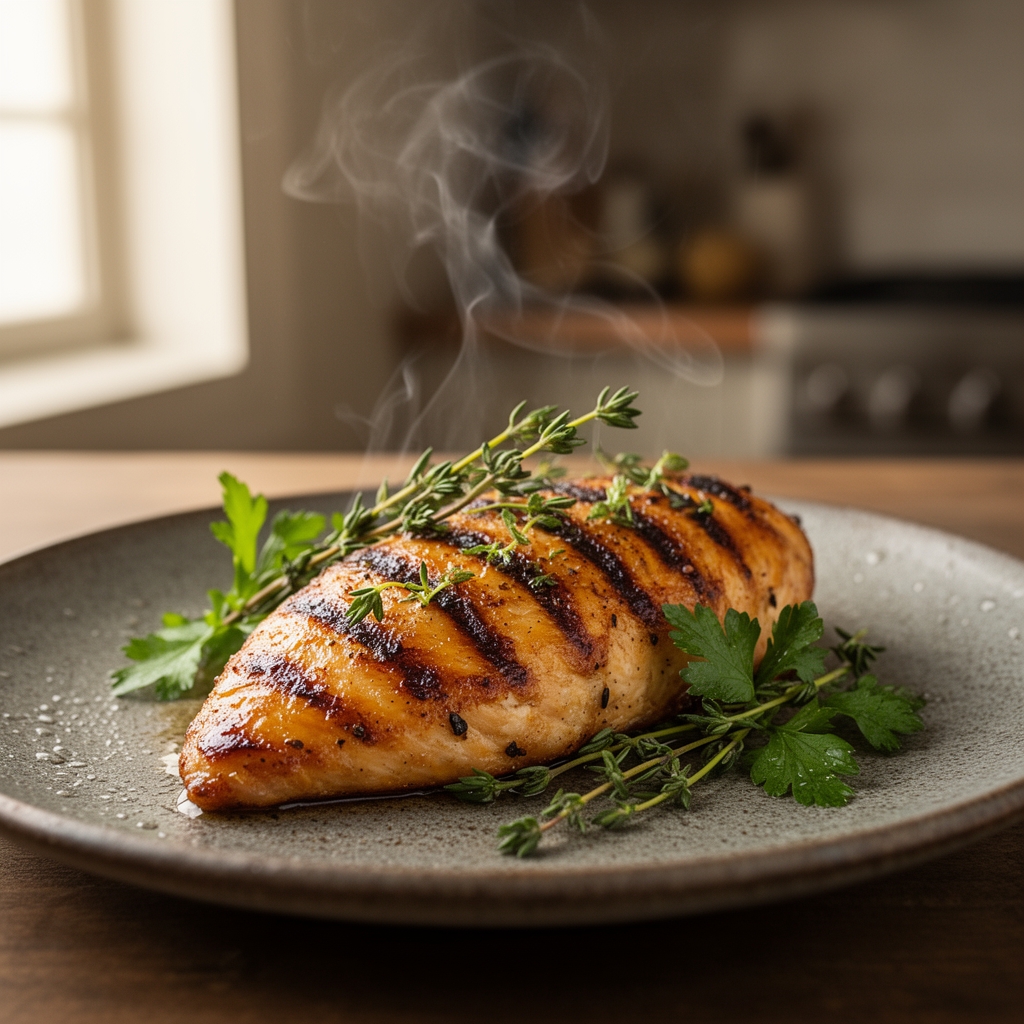
The moment boneless thighs hit a screaming hot cast-iron pan, their fat renders into golden pools while pineapple juice caramelizes at the edges, filling your kitchen with the unmistakable scent of char and tropical sweetness. These hawaii chicken recipes capture that precise balance of savory depth and fruit-forward brightness, techniques rooted in the layered cooking traditions of the islands where Asian, Polynesian, and American flavors converge over open flame and smoking grills. Each of the eight recipes in this guide exploits the Maillard reaction, acid-sugar interplay, and strategic fat rendering to deliver restaurant-caliber results at home. You will master huli huli glaze dynamics, teriyaki reduction chemistry, and the structural integrity of skewered protein over direct heat. Forget bland, watery marinades. These methods prioritize crust development, moisture retention through brining or velveting, and multi-layer seasoning that penetrates deep into the muscle fibers before, during, and after cooking.
The Gathers
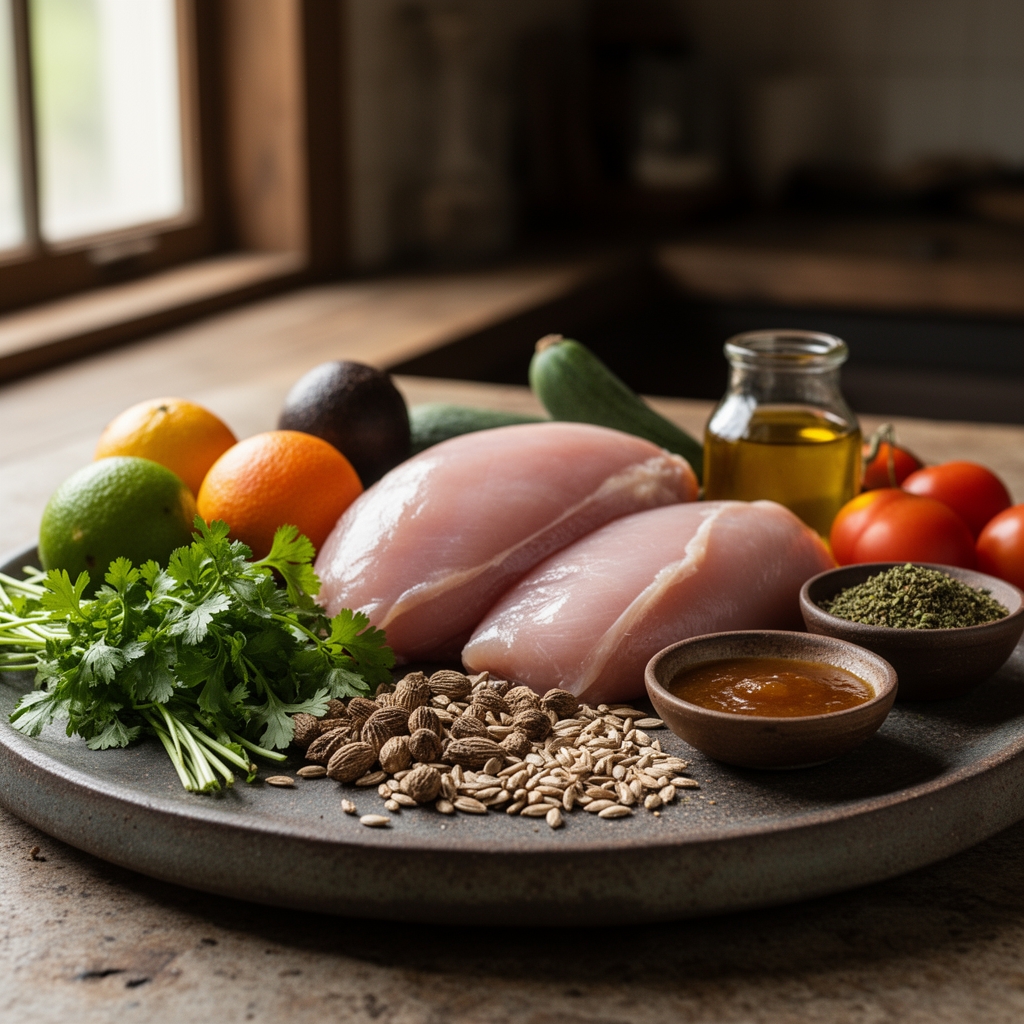
As you see in the ingredient spread below, bone-in, skin-on chicken thighs anchor most preparations because their intramuscular fat self-bastes during cooking and their connective tissue converts to gelatin above 160°F, ensuring succulence. Fresh pineapple (not canned) contributes bromelain, a proteolytic enzyme that tenderizes while its natural sugars drive caramelization. Soy sauce or tamari delivers glutamates for umami depth; choose low-sodium versions to control salt independently. Ginger root and garlic provide aromatic volatile compounds that bloom in hot oil, while brown sugar or coconut sugar fuels crust formation via non-enzymatic browning.
Sesame oil (toasted) adds nutty finish notes; use sparingly or it dominates. Rice vinegar or lime juice balances sweetness and denatures surface proteins for better marinade adhesion. Scallions, macadamia nuts, and toasted coconut flakes serve as textural garnishes. Ketchup or tomato paste appears in several huli huli and teriyaki bases, contributing viscosity and additional sugars.
Smart Substitutions: Swap thighs for breasts if you prefer leaner cuts, but brine them in 5% salt solution for 30 minutes to prevent dryness. Replace fresh pineapple with mango or papaya for similar enzymatic action. Use coconut aminos instead of soy for a soy-free, slightly sweeter profile. Substitute honey or agave for brown sugar, adjusting quantities by 25% due to higher moisture content.
The Clock
Prep Time: 20 minutes
Cook Time: 35 minutes
Total Time: 55 minutes
Serves 6
Chef's Flow dictates working backward from service. While your oven preheats to 400°F (204°C), prep aromatics: mince ginger and garlic, zest citrus, toast nuts. During the 10-minute thigh marinade, char pineapple rings under the broiler (3 minutes per side) to concentrate sugars and develop smoky notes. Sear chicken skin-side down for 7 minutes undisturbed, then flip and transfer the entire pan to the oven for 18 minutes. This two-stage method ensures crispy skin and an internal temp of 165°F (74°C) without scorching the glaze. Rest meat 5 minutes for juices to redistribute via capillary action. Total active time: 15 minutes. The rest is hands-off.
The Masterclass
1. Brine and Dry
Submerge thighs in 5% brine (50g salt per liter water) for 30 minutes, then pat bone-dry with paper towels. Residual moisture is the enemy of crust.
Chef's Secret: Brining increases water-holding capacity by altering myofibrillar proteins, but surface dryness ensures immediate Maillard reactions rather than steam.
2. Build the Glaze Base
Whisk together 120ml soy sauce, 80g brown sugar, 60ml pineapple juice, 2 tablespoons rice vinegar, 1 tablespoon grated ginger, 3 minced garlic cloves, and 1 tablespoon ketchup. Simmer over medium heat for 8 minutes until reduced by one-third and coats the back of a spoon.
Why It Works: Reduction concentrates flavor molecules and increases viscosity through water evaporation, allowing the glaze to cling rather than slide off the protein.
3. Sear Skin-Side Down
Heat a cast-iron skillet over medium-high until a water droplet shatters on contact (around 375°F/190°C). Place thighs skin-side down without moving them for 7 minutes. Render fat will pool; tilt the pan occasionally to baste the tops.
Chef's Secret: Constant flipping releases precious fond and interrupts crust formation. Let physics do the work.
4. Flip and Glaze
Turn thighs, brush with half the glaze, then transfer the entire skillet to a preheated 400°F (204°C) oven. Roast for 12 minutes, pull out, apply the second glaze layer, and roast another 6 minutes.
Why It Works: The oven's ambient heat cooks evenly while the sugar in the glaze caramelizes without direct flame contact, preventing acrid char.
5. Rest and Garnish
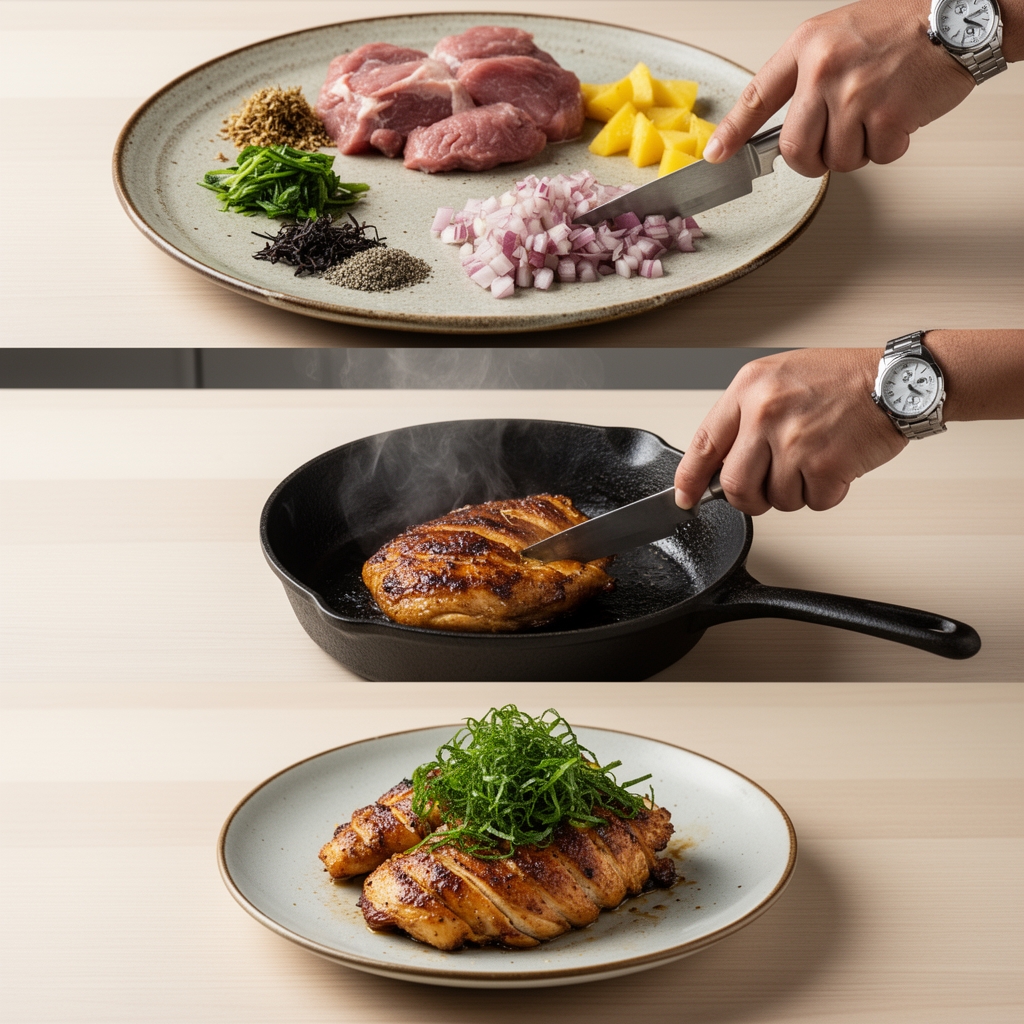
Remove from oven when an instant-read thermometer reads 160°F (71°C); carryover will bring it to 165°F (74°C) within 5 minutes. Tent loosely with foil. Note the texture shown in the step-by-step photos: lacquered, mahogany crust with no pale spots.
Chef's Secret: Collagen conversion peaks between 160-180°F, transforming chewy connective tissue into silky gelatin during the rest.
6. Variations: Teriyaki, Huli Huli, Shoyu
For Teriyaki, add 2 tablespoons mirin and reduce glaze to syrup consistency. For Huli Huli (meaning "turn turn"), double the ginger, add 1 teaspoon Chinese five-spice, and grill over indirect heat, flipping every 5 minutes. For Shoyu, skip sugar entirely, increase soy to 180ml, and finish with a squeeze of yuzu or lemon.
Why It Works: Each variation manipulates sugar-to-acid-to-salt ratios, creating distinct sensory profiles while maintaining structural integrity through proper heat management.
7. Pineapple Skewers
Thread 1-inch chicken chunks and pineapple cubes onto soaked bamboo skewers, brush with glaze, and grill over direct high heat (500°F/260°C) for 3 minutes per side. The pineapple's bromelain pre-tenderizes while its sugars char into crispy edges.
Chef's Secret: Soaking skewers for 30 minutes prevents ignition, and alternating protein with fruit creates natural insulation against overcooking.
8. Slow-Cooker Kalua Adaptation
Rub thighs with Hawaiian sea salt and liquid smoke, nestle in a slow cooker with cabbage wedges, cook on low for 6 hours. The collagen breaks down into a luscious broth while cabbage absorbs rendered fat.
Why It Works: Low, moist heat (around 200°F/93°C) mimics traditional underground imu ovens, yielding fall-apart tenderness without active monitoring.
Nutritional Info
Per serving (1 thigh with glaze, skin-on): Calories: 340 | Protein: 28g | Fat: 18g (6g saturated) | Carbohydrates: 16g | Fiber: 0.5g | Sugar: 13g | Sodium: 780mg
Skin-on preparation increases fat but also flavor delivery and satiety. Removing skin drops fat to 9g per serving. Pineapple contributes vitamin C and manganese; soy sauce provides trace minerals and B vitamins.
Dietary Swaps
Keto: Substitute brown sugar with erythritol or monk fruit blend (1:1 ratio), use coconut aminos, and omit pineapple. Add avocado oil for fat density. Macros shift to 3g net carbs per serving.
Gluten-Free: Ensure soy sauce is labeled gluten-free (tamari typically is) and check ketchup for hidden wheat derivatives.
Vegan: Replace chicken with extra-firm tofu (pressed for 30 minutes, cubed, tossed in cornstarch) or king oyster mushrooms sliced lengthwise. Both develop crust similarly. Marinate 2 hours for deeper penetration since plant matrices differ from animal muscle. Nutritional profile shifts to lower protein (12g per serving for tofu) but higher fiber.
Serving & Presentation
Plating Idea 1: Pool reduced glaze on a warm plate, shingle sliced thigh over it, top with microgreens and crushed macadamias. The visual contrast between dark lacquer and bright greens signals flavor intensity.
Plating Idea 2: Serve skewers standing upright in a small bowl of jasmine rice, garnish with toasted sesame seeds and lime wedges. Height creates drama; citrus allows guests to adjust acidity.
Plating Idea 3: Family-style platter lined with grilled pineapple slices, arrange whole thighs on top, drizzle with pan sauce, scatter scallions and coconut flakes. Communal service honors Hawaiian hospitality traditions.
The Pro-Dodge
Pitfall 1: Marinade burns before chicken cooks through.
Fix: Apply glaze only in the final 10 minutes of cooking or use a two-zone grill setup to finish over indirect heat.
Pitfall 2: Rubbery, pale skin.
Fix: Start with room-temperature, bone-dry skin and a screaming hot pan. Don't rush the sear; 7 minutes is non-negotiable.
Pitfall 3: Dry breast meat in skewer variations.
Fix: Brine cubed breast for 15 minutes before threading, or switch to dark meat exclusively. Thighs forgive timing errors; breasts do not.
The Meal Prep Corner
Cooked thighs hold in an airtight container, refrigerated, for 4 days. Reheat in a 350°F (177°C) oven for 12 minutes, skin-side up on a wire rack to preserve crust. Avoid microwaving; steam softens the exterior.
Freeze cooked, cooled thighs (individually wrapped) for up to 3 months. Thaw overnight in the fridge, then reheat as above. The glaze may darken further but flavor remains intact.
Raw marinated chicken freezes beautifully; combine thighs and marinade in a zip-top bag, freeze flat for space efficiency, then thaw and cook. The enzymatic tenderization continues during the thaw, intensifying results.
For skewers, assemble but don't cook. Freeze on a sheet pan, then transfer to freezer bags. Grill directly from frozen, adding 2 minutes per side.
The Wrap-Up
You now possess eight versatile frameworks that translate island heat and sweetness into repeatable, scaleable recipes. Whether you opt for the smoky char of huli huli, the glossy finish of teriyaki, or the low-and-slow pull of kalua-style thighs, the underlying principles remain constant: controlled heat, strategic glaze timing, and respect for the protein's natural moisture. Each technique sharpens your understanding of sugar behavior under high temperatures and the irreplaceable role of fat in flavor delivery. Cook one, master the mechanics, then rotate through the variations to discover which flavor profile resonates most with your household. Share your results, swap your own substitutions, and tag your plated masterpieces so the community can learn from your iterations.
The Kitchen Table
Can I use chicken breasts instead of thighs?
Yes, but brine them in a 5% salt solution for 30 minutes and reduce oven time to 15 minutes total to avoid dryness. Breasts lack intramuscular fat, so they rely entirely on external moisture retention strategies.
Why does my glaze taste too salty?
Reduction concentrates sodium. Start with low-sodium soy sauce and taste the glaze before the final reduction. Add water or pineapple juice to dilute if necessary, then reduce again to desired thickness.
How do I prevent pineapple from turning mushy on skewers?
Use slightly underripe pineapple with firmer flesh, cut into 1-inch cubes, and limit grill time to 6 minutes total. The bromelain remains active but the structure holds under brief high heat.
Can I make the glaze ahead of time?
Absolutely. Refrigerate in an airtight container for up to 2 weeks. Reheat gently before brushing; cold glaze doesn't adhere properly and can lower the pan temperature, causing steam instead of sear.
What's the best way to reheat leftovers without losing the crust?
Oven at 350°F (177°C) on a wire rack for 12 minutes. The circulating air re-crisps the skin. Microwaving introduces steam, which softens all your hard-won texture.