
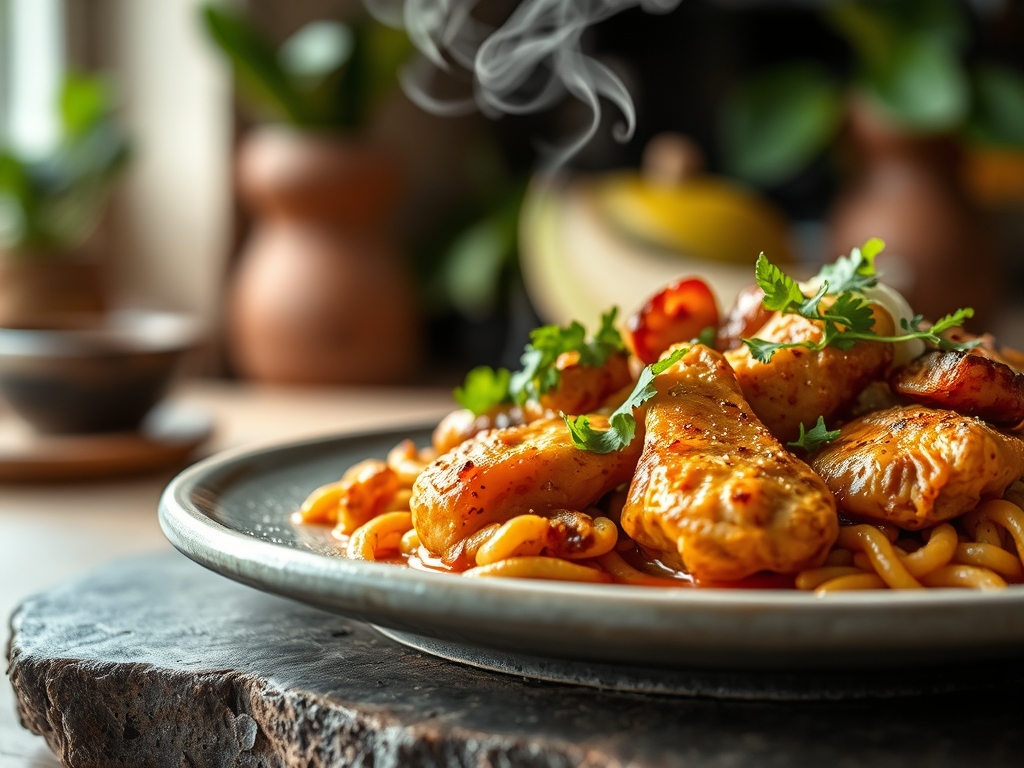
The scent of charred tomatillos mingling with cumin-toasted chicken thighs creates an olfactory signature that defines authentic mexican food with chicken recipes. That first bite, when the acidity of lime cuts through rendered fat and the pop of cilantro releases its aldehydes, signals you've moved beyond Tex-Mex approximations into regional Mexican technique. These nine recipes span coastal Veracruz to the high-altitude kitchens of Oaxaca, each deploying chicken as a canvas for chiles, smoke, and ancestral spice blends. The unifying thread? Layered heat application and strategic acid deployment that transforms lean poultry into succulent, deeply flavored protein. Whether you're browning bone-in pieces for Tinga Poblana or poaching breasts for Salpicon, understanding how Mexican cooks manipulate temperature and pH will recalibrate your entire approach to weeknight dinners. The techniques here aren't complicated, but they demand respect for sequence and timing.
The Gathers
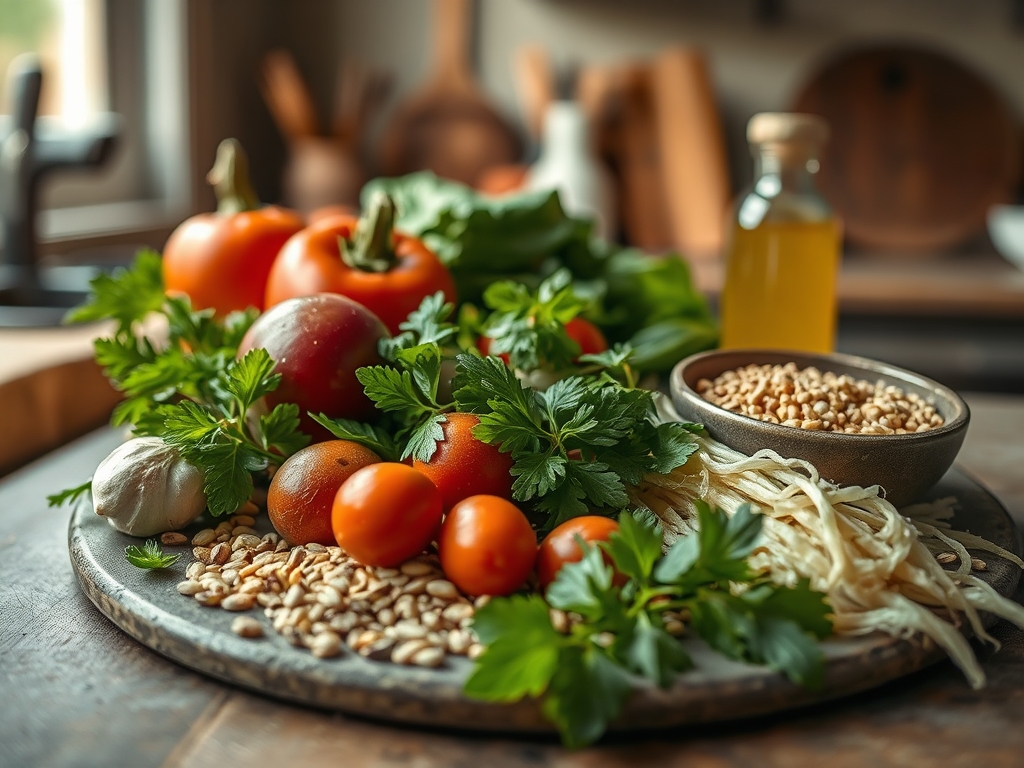
As you see in the ingredient spread below, quality matters more than quantity. Chicken thighs (bone-in, skin-on, 1.5 kg) provide the fat content necessary for Maillard browning at 175°C surface temperature. Dried chiles (guajillo, ancho, pasilla, 60 g total) rehydrate in near-boiling water for 15 minutes, softening their leathery skins while volatile capsaicinoids dissolve into the soaking liquid. Mexican oregano (15 g, not Mediterranean) brings camphor notes absent in its European cousin. Tomatoes (800 g Roma) and tomatillos (600 g, husks removed) anchor sauces with glutamate-rich umami.
Garlic (1 full head), white onion (2 medium), fresh cilantro (1 bunch with roots), and limes (6, for 90 ml juice) form the aromatic backbone. Chicken stock (1 liter, homemade or low-sodium) adds collagen for body. Crema Mexicana (240 ml) finishes dishes with tangy richness, while Cotija cheese (150 g, crumbled) provides salty crystalline bursts.
Smart Substitutions: Greek yogurt thinned with lime juice replaces crema. Chicken breasts work but require 25% reduced cook time. Feta substitutes for Cotija in a pinch.
The Clock
Prep Time: 35 minutes (chile rehydration, vegetable charring, spice toasting)
Cook Time: 55 minutes (active browning, simmering, reduction)
Total Time: 90 minutes
Chef's Flow: While chiles soak, char your tomatillos and onions under the broiler at 260°C for 8 minutes. Use that time to toast whole cumin and coriander seeds in a dry pan until fragrant (90 seconds), then grind. Season and sear chicken during the final 5 minutes of chile soaking. This overlapping sequence compresses what could be 2 hours into a streamlined 90-minute process without sacrificing depth.
The Masterclass
Step 1: Toast and Rehydrate Chiles
Remove stems and seeds from dried chiles. Toast in a 180°C oven for 90 seconds until pliable and aromatic, not blackened. Submerge in 500 ml water just off the boil, weight with a plate, steep 15 minutes.
Why It Works: Toasting volatilizes essential oils locked in the dried flesh. The brief heat exposure breaks down cellulose, allowing water to penetrate faster. Over-toasting creates bitter char compounds.
Step 2: Char Aromatics
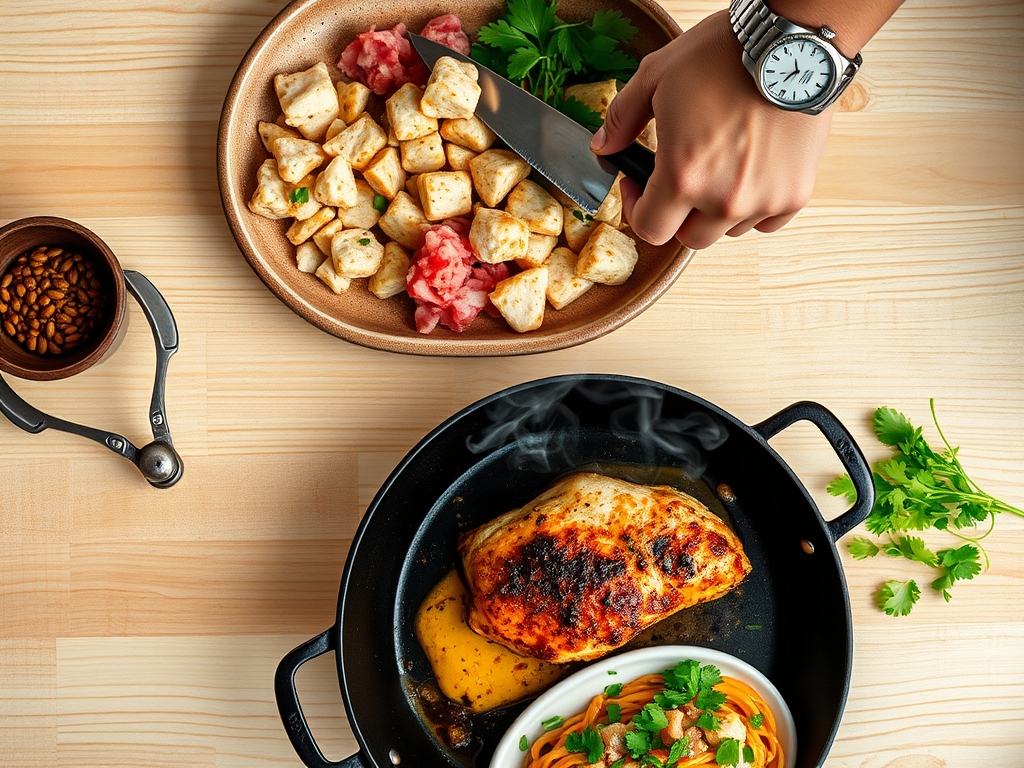
Halve tomatillos and onions, place cut-side up on a foil-lined sheet. Broil 10 cm from element at 260°C for 8 minutes until blackened in spots. Note the texture shown in the step-by-step photos: blistered skin, softened flesh.
Chef's Secret: Charring triggers the Maillard reaction and caramelization simultaneously, creating hundreds of new flavor molecules. The slight bitterness from char balances the tomatillos' natural tartness.
Step 3: Sear Chicken
Pat thighs dry, season with 10 g salt. Heat 30 ml neutral oil in a heavy skillet to 190°C (shimmering, just before smoke point). Sear skin-side down 6 minutes undisturbed, flip, cook 4 minutes. Remove and reserve.
Why It Works: Moisture is the enemy of browning. A dry surface allows rapid dehydration at the pan interface, forming a crust through amino acid and reducing sugar reactions. Moving the meat prematurely prevents optimal crust formation.
Step 4: Blend the Sauce
Drain chiles (reserve liquid). Blend chiles, charred vegetables, garlic, toasted spices, and 250 ml soaking liquid for 90 seconds until completely smooth. Strain through a fine-mesh sieve, pressing solids.
Chef's Secret: Straining removes chile skin fragments and seed debris that create gritty texture. The strained sauce should coat a spoon like heavy cream.
Step 5: Fry and Simmer
In the same skillet (with fond), heat 15 ml oil over medium-high. Pour in sauce (it will sputter), fry 5 minutes, stirring constantly, until darkened one shade. Return chicken, add stock, simmer covered 25 minutes until internal temperature reaches 74°C.
Why It Works: Frying the sauce concentrates sugars and deepens color through additional Maillard reactions. The technique, called "freir la salsa," is fundamental to Mexican cooking and intensifies flavor exponentially.
Step 6: Reduce and Finish
Remove chicken, tent with foil. Boil sauce uncovered 8 minutes until reduced by one-third, nappe consistency. Stir in 30 ml lime juice, 5 g salt, taste and adjust. Return chicken, coat thoroughly.
Chef's Secret: Lime juice added during high heat loses its bright acid punch to volatilization. Adding it at the end preserves those fresh, sharp notes that cut through richness.
Nutritional Info
Per serving (1 thigh with 120 ml sauce): 385 kcal, 24 g fat (7 g saturated), 42 g protein, 14 g carbohydrates, 3 g fiber, 680 mg sodium. The bone-in preparation yields more collagen, which your body partially converts to glycine and proline during digestion. Chile peppers contribute capsaicin, which studies suggest may boost metabolic rate by 5% for 30 minutes post-consumption.
Dietary Swaps
Keto Adaptation: Use only 400 g tomatillos, increase fat with 60 ml avocado oil stirred into finished sauce. Net carbs drop to 6 g per serving.
Gluten-Free: Inherently compliant. Verify stock contains no wheat-based additives.
Vegan Pivot: Substitute oyster mushrooms (torn, not sliced) for chicken. Sear at high heat to remove moisture, proceed with sauce. Add smoked paprika (5 g) for depth.
Serving & Presentation
Plating Idea 1: Pool sauce on a warm shallow bowl. Nestle chicken thigh at 7 o'clock. Garnish with pickled red onions (12 o'clock), cilantro leaves (2 o'clock), crema drizzle (diagonal). Serve with charred lime half.
Plating Idea 2: Shred chicken, toss with reduced sauce. Fill warm corn tortillas, top with diced white onion, cilantro, and radish slices. Serve family-style on a wood board.
Plating Idea 3: Slice thigh against the grain into 1 cm strips. Fan over cilantro-lime rice, spoon sauce over protein only (not rice), garnish with toasted pepitas and Cotija.
The Pro-Dodge
Pitfall 1: Watery, thin sauce. Fix: Simmer uncovered longer until it coats a spoon. Residual steam from covered cooking dilutes flavor.
Pitfall 2: Bitter sauce. Fix: You over-charred the chiles or vegetables. Next time, watch for blistering, not blackening. Rescue by adding 5 g sugar to balance.
Pitfall 3: Dry, chalky chicken. Fix: You overcooked past 74°C internal. Use an instant-read thermometer. Carryover cooking adds 3-5°C after removal, so pull at 71°C.
The Meal Prep Corner
Storage: Cool chicken in sauce completely within 2 hours. Refrigerate in airtight containers up to 4 days. Sauce thickens when cold (starch retrogradation); this is normal.
Reheating for Day-One Quality: Bring to room temperature 30 minutes. Reheat in a covered skillet over medium-low with 60 ml added stock, 8 minutes, flipping once. Microwave steams the meat and makes skin flabby. Finish with fresh lime juice and cilantro.
Freezing: Freeze sauce and chicken separately in vacuum-sealed bags, up to 3 months. Thaw overnight in fridge.
Let's Keep This Fire Going
You've just absorbed nine generations of technique compressed into regional mexican food with chicken recipes that respect tradition while embracing precision. These methods work because they honor chemistry, not guesswork. The char, the fry, the layered acid, the timed reduction: each step has a reason rooted in how molecules behave under heat.
I want to see your plating. Tag your finished dishes, share your substitutions, tell me which of the nine became your weeknight anchor. Drop a comment below with your biggest "aha" moment during prep. Let's build a space where home cooks and pros swap intel, troubleshoot together, and keep these recipes alive.
The Kitchen Table
Q: Can I use boneless, skinless chicken breasts?
A: Yes, but reduce total cook time to 18 minutes and add 30 ml oil to the sauce for fat content. Breasts lack the collagen and intramuscular fat that keep thighs moist during longer simmering.
Q: What's the difference between guajillo and ancho chiles?
A: Guajillos bring bright, tangy heat with berry notes. Anchos (dried poblanos) offer deep, raisin-like sweetness with mild warmth. A 2:1 guajillo-to-ancho ratio balances brightness and depth.
Q: My sauce tastes flat. What's missing?
A: Likely salt or acid. Add 2 g salt at a time, tasting between additions. If still flat, squeeze in 15 ml lime juice. Mexican cooking relies heavily on acid to balance rich, earthy chiles.
Q: Can I make this in a slow cooker?
A: Sear chicken and fry the sauce on the stovetop first (steps 3 and 5). Transfer to slow cooker with stock, cook on low 4 hours. Slow cookers can't achieve the Maillard reaction, so front-load the browning.
Q: How do I scale this for a crowd?
A: The recipe doubles or triples cleanly. Use a large roasting pan (not a skillet) for searing in batches. Don't crowd the pan or chicken will steam, not brown. Keep finished batches warm in a 95°C oven while you sear the rest.